Does raspberry seed oil have a sun protection factor? Facts about oil and sun protection
Raspberry seed oil is often described as having a natural SPF, but a cosmetic oil without a declared and tested sun protection factor cannot replace sun cream. Understand the clear difference and learn how to use the oil safely in your skincare routine.
Does raspberry seed oil have an SPF? You can find many specific SPF figures on blogs and social media, but a figure without a standardised test of the finished product is not a reliable SPF. A pure cosmetic oil must therefore not be used as a substitute for sun cream. Here, we distinguish between skincare and proven sun protection.
Does raspberry seed oil provide sun protection in practice?
Raspberry seed oil contains natural fatty acids and plant compounds, but this does not mean that the oil has a known, stable SPF on the skin. Sun protection factor is determined by standardised tests of the complete formulation and the amount in which the product is to be used.
Raw materials may show some UV absorption in a laboratory, but this does not reliably indicate:
- how evenly the oil spreads on the skin
- how much UVA and UVB protection it provides
- how stable it is in sunlight
- how long any protection lasts
- whether it provides protection when used in the amount typically applied as a facial oil
Therefore, you should only rely on a sun protection factor (SPF) when it is clearly stated on a product that has been developed and tested specifically as sun protection.
Where does the SPF myth come from?
The myth is often based on laboratory measurements of individual plant oils. The figures are then copied from one source to another without any information on methodology, UVA protection, batch variation or quantity. Ultimately, an unreliable laboratory result can come to resemble an official SPF rating.
This is an important distinction, because SPF primarily describes protection against UVB rays and sunburn. Good sun protection must also address UVA. A facial oil without documented broad-spectrum protection does not provide you with that level of safety.
What is recommended for sun protection?
The Danish Cancer Society recommends shade, clothing and a sun hat as the most important sun protection measures, and sun cream with a minimum SPF of 30 on skin that is not covered. See their factsheet on sun cream.
A practical routine is:
- Seek shade when the sun is strong.
- Wear covering clothing, a sun hat and sunglasses.
- Apply plenty of sun cream, with an SPF of at least 30, to the rest of your skin.
- Reapply as per the product instructions and after swimming or heavy sweating.
Raspberry seed oil can be used as part of a skincare routine, but it is not a substitute for these steps.
How to use raspberry seed oil
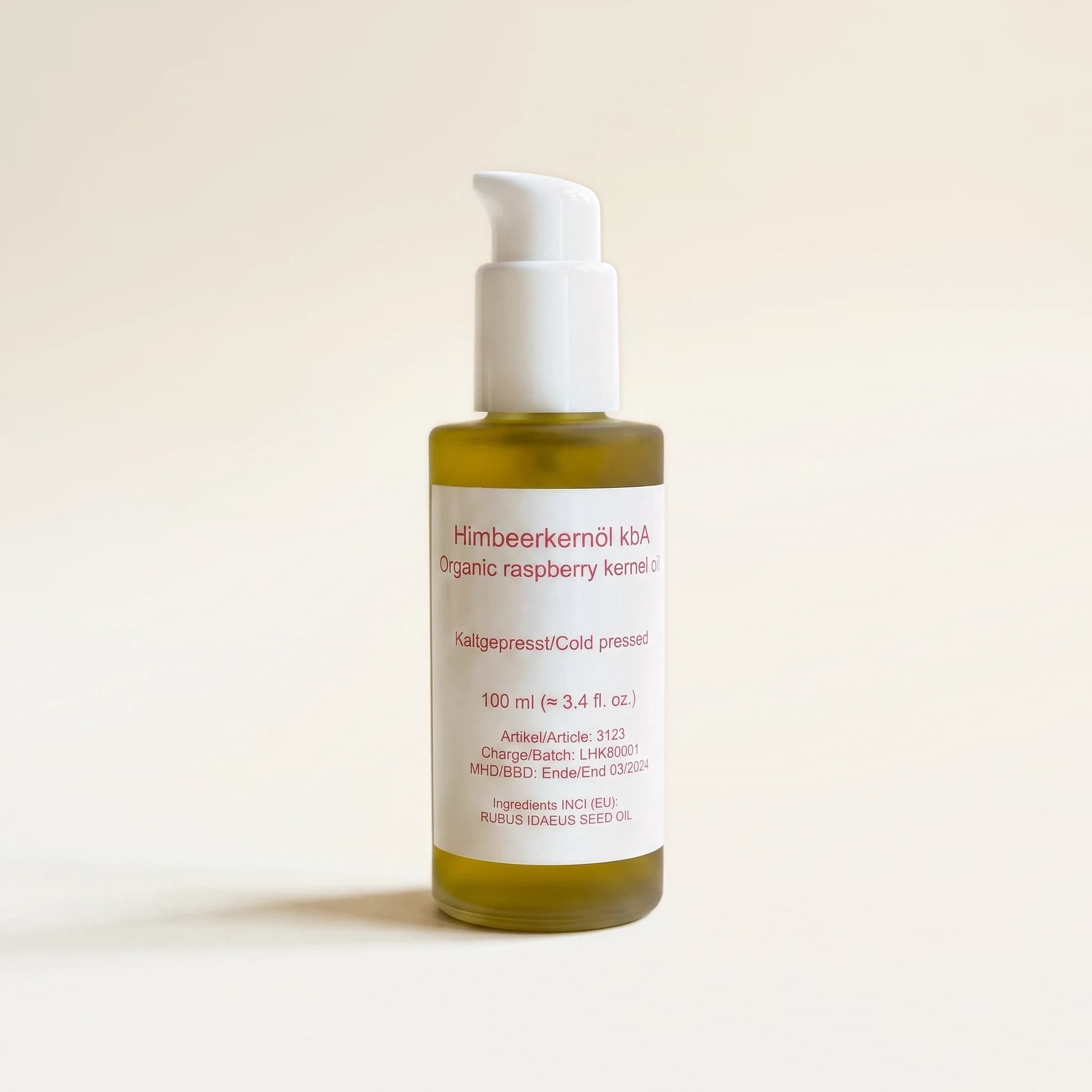
ByLykke organic raspberry seed oil is a pure cosmetic oil. Apply a few drops to slightly damp skin or on top of your moisturiser to reduce moisture loss and leave your skin feeling soft.
In the morning, the order could be:
Gentle cleanser → serum (if using) → moisturiser → a very small amount of oil → sun cream.
Allow each layer to settle so that the sun cream can be applied evenly. If the oil causes the sun cream to flake or slide off, save the oil for your evening routine.
Can oil be used after a day in the sun?
Oil can soften dry skin, but it does not treat sunburn. In the case of mild sunburn, the skin must first and foremost be removed from the sun and gently cooled. Avoid further sun exposure until the skin has calmed down.
Seek medical advice in the event of widespread or severe sunburn, large blisters, fever, dizziness, nausea or if your general condition is affected. Young children with sunburn should be assessed without delay.
Who should take extra care?
Always test a new oil product on a small area first, especially if your skin is very sensitive. Stop using it if you experience itching, swelling or persistent redness. A plant-based oil can still cause irritation or an allergic reaction, even if it is natural and organic.
If you have rosacea, eczema, active acne or are undergoing medical skin treatment, you can ask your doctor whether oil is suitable for your routine. Also read our guide to a fragrance-free skincare routine.
Frequently asked questions
Does raspberry seed oil have a natural SPF?
You shouldn’t rely on an SPF rating unless the finished product has been tested and labelled as sun protection.
Can raspberry seed oil replace sun cream?
No. Use shade, clothing, a hat and a tested sun cream with a minimum SPF of 30.
Should the oil be applied before or after sun cream?
If you use oil in the morning, sun cream should be the final step in your skincare routine. Use only a small amount of oil and allow it to absorb. Alternatively, you can use the oil in the evening.
Can I mix the oil directly into the sun cream?
No. You may dilute the formulation and disrupt the protective barrier that the sun cream is designed to form. Use the sun cream as directed.
Is raspberry seed oil an after-sun product?
It is a cosmetic oil, not a medicine or a tested after-sun product. It can leave dry skin feeling soft, but it does not treat sunburn.
Products that suit this article